Table of Contents
The chapter is split into three sections: (1) types of mental tests, (2) psychometric properties of tests, and (3) test individual certifications and management of tests. Where feasible an effort has been made to address the context of handicap determination; nevertheless, the phase is mostly an introduction to emotional screening.
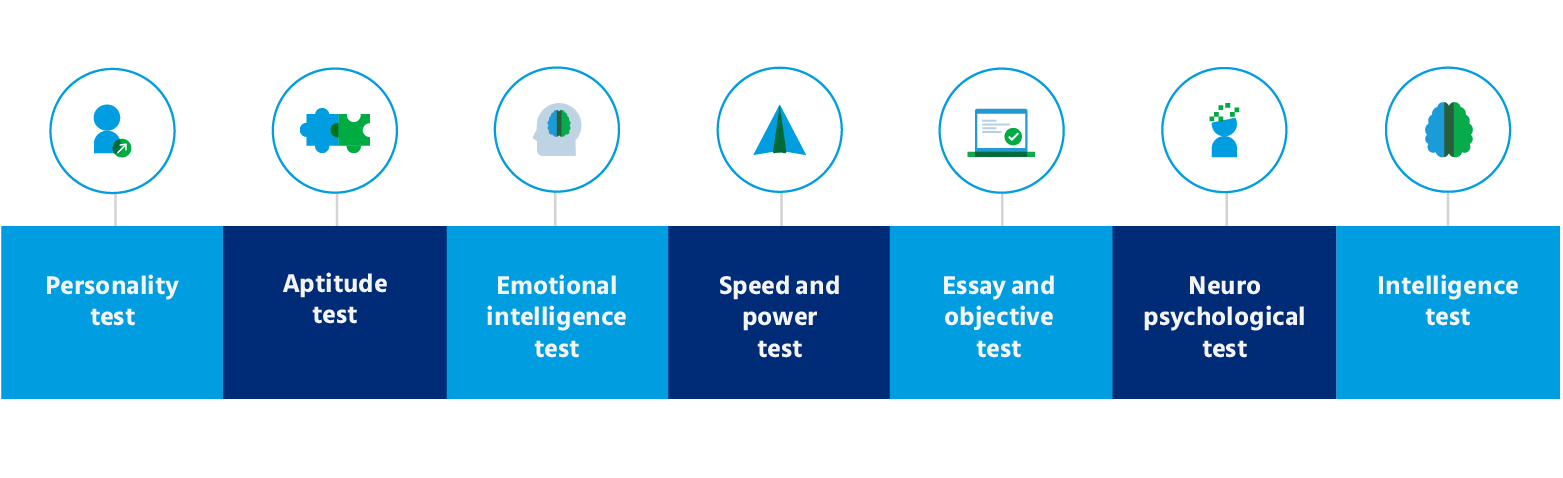
The taking place discussion lays out several of the differences amongst such tests; nonetheless, it is necessary to keep in mind that there is nobody appropriate cataloging of the sorts of tests because the various classifications usually overlap. Mental tests can be classified by the very nature of the actions they assess (what they gauge), their management, their racking up, and just how they are used.
Steps of normal habits, such as personality, interests, worths, and perspectives, might be described as non-cognitive measures. A test of maximal efficiency, certainly sufficient, asks people to answer questions and resolve problems as well as they potentially can. Since examinations of optimum performance usually include cognitive efficiency, they are frequently described as cognitive examinations.
Non-cognitive measures rarely have correct answers in itself, although in some instances (e.g., work tests) there may be chosen reactions; cognitive tests often have items that have proper responses. It is with these two lensesnon-cognitive steps and cognitive teststhat the committee examines emotional testing for the objective of impairment evaluation in this record.
Permanent Transformation of Insight-Oriented Work for Emotional Wellness
An organized individuality step, for instance, may ask individuals true-or-false concerns about whether they take part in numerous activities or otherwise. Those are extremely structured concerns. On the other hand, in providing some commonly utilized individuality actions, the examiner offers an unstructured projective stimulus such as an inkblot or a photo.
The premise of these projective steps is that when presented with ambiguous stimuli an individual will predict his/her underlying and subconscious motivations and attitudes. The racking up of these latter measures is usually a lot more intricate than it is for organized steps. There is excellent range in cognitive tests and what they measure, thus needing a lengthier explanation.
Both types of tests involve discovering. Success examinations commonly involve learning from extremely specialized education and training experiences; whereas, most capacity examinations analyze finding out that has happened in one's setting.
Financial Considerations for Payment Options for Dynamic Psychotherapy for Child therapy
Alternatively, one can also have a vocabulary examination based upon words one finds out only in an academic setting. Intelligence tests are so prevalent in several clinical psychology and neuropsychology situations that we likewise consider them as neuropsychological actions. Some capabilities are gauged making use of subtests from knowledge examinations; for instance, certain functioning memory examinations would be an usual instance of a knowledge subtest that is utilized singly.
Some capacity tests are burglarized verbal and performance tests. Verbal examinations, undoubtedly sufficient, utilize language to ask questions and show answers. Efficiency examinations on the various other hand minimize the use of language; they can entail resolving issues that do not entail language. They might include manipulating items, mapping mazes, putting pictures in the proper order, and finishing patterns.
Efficiency examinations are additionally occasionally utilized when the test-taker lacks proficiency in the language of the testing. Many of these tests analyze aesthetic spatial tasks. Historically, nonverbal actions were provided as intelligence examinations for non-English speaking soldiers in the USA as early as World war. These examinations remain to be used in educational and professional setups given their minimized language part.
An absolutely speeded examination is one that everybody might obtain every concern appropriate if they had adequate time. Some examinations of clerical skills are precisely like this; they may have 2 lists of paired numbers, as an example, where some pairings have two identical numbers and other pairings are different. The test-taker merely circles the pairings that are similar.
Combining of Depth Psychology with Neuroscience in Chicago
A real power test is one where all test-takers have adequate time to do their best; the only concern is what they can do. Undoubtedly, few examinations are either purely speeded or totally power tests.
When test-takers have impairments that affect their ability to react to concerns promptly, some actions offer added time, relying on their function and the nature of the features being evaluated. Concerns on both accomplishment and capacity tests can entail either acknowledgment or free-response in answering. In educational and intelligence tests, acknowledgment tests typically consist of multiple-choice questions where one can look for the right answer amongst the alternatives, acknowledge it as proper, and select it as the correct solution.

Table of Contents
Latest Posts
Finding an Experienced Psychodynamic Practitioner in Your Area
The Significance of the Therapeutic Relationship in Child therapy Treatment for Growth
Understanding Physical Wounds After Betrayal in Wheat Ridge
Navigation
Latest Posts
Finding an Experienced Psychodynamic Practitioner in Your Area
The Significance of the Therapeutic Relationship in Child therapy Treatment for Growth
Understanding Physical Wounds After Betrayal in Wheat Ridge